Social Work and the SDGs as Commons: Building Collective Imaginaries for Sustainable Futures
Swetha Rao Dhananka
University of Applied Sciences and Arts Western Switzerland (HES-SO), Switzerland
CORRESPONDENCE:
Swetha Rao Dhananka
e-mail: swetha.raodhananka@hefr.ch
Abstract
This paper places social work within global debates on sustainability and examines how the profession can contribute to achieving the Sustainable Development Goals (SDGs). It argues that social work can support the SDGs through a commons-based approach. This argument builds on recent changes in international social work, particularly the growing recognition of environmental issues in professional standards, policies, and practices, as reflected in the work of the International Federation of Social Workers (IFSW), the profession’s global body.
The paper argues that today’s interconnected social, economic, and ecological crises make it essential for social work to adopt an eco-social justice perspective. It critically examines the origins and assumptions of the UN SDG framework and clarifies how social work fits within it. The paper introduces an analytical triangle that connects the SDGs understood as commons, processes of commoning, and the ethical principles and professional competences of social work.
A key argument is that building shared collective imaginaries is central to driving sustainable social transformation. Using examples from both local and global contexts, the paper shows how social workers support participatory, community-led interpretations of SDG priorities. It also illustrates how social workers help communities co-design development pathways and engage in decolonizing and reconstructing imaginaries in order to create more just and sustainable futures.
The paper concludes by highlighting the potential of social work education, practice, and engagement at the macro level to advance inclusive development agendas. These agendas are grounded in biocentric and Indigenous worldviews and aim to support the co-creation of eco-social futures in which no one is left behind.
Keywords
SDGs, Commoning, IFSW, Eco-social, Imaginary.
The shift towards «eco-social» in international and social work scholarship
Social work can justifiably claim to have been among the first professions in the twenty-first century to make explicit public statements linking human and community wellbeing to changes in the physical environment (Jones, 2018). Following consultations at the 2010 World Conference, Promoting community and environmental sustainability was established as the third pillar of the Global Agenda for Social Work and Social Development, facilitated by the International Federation of Social Workers (IFSW). This development made it possible to incorporate the natural and physical environment into the «person-in-environment» framework in social work theory, which had traditionally focused primarily on the social environment.
As a result, social work positioned itself at the forefront of efforts to explore the relationships between individuals, communities, and their physical environments well before the launch of the Sustainable Development Goals in 2015 (Jones, 2018). This shift reflects a growing recognition that socially vulnerable communities are disproportionately exposed to environmental risks and injustices. Consequently, as the profession confronts intersecting socio-economic and ecological crises affecting vulnerable populations, and given its foundational commitment to social justice, social work is compelled to engage actively in the pursuit of eco-social justice.
|
Box: IFSW The International Federation of Social Workers (IFSW) encompasses 147 country-members. IFSW strives for social justice, human rights, sustainable social development through social work best practices and engagement in international cooperation. Social workers are working within communities and governments to combat complex and intersecting crises and are key actors contributing to the creation of eco-social contracts. IFSW has been granted Special Consultative Status by the Economic and Social Council (ECOSOC) of the United Nations and the United Nations Children’s Fund (UNICEF). As the global professional body for social work, the IFSW acts as an inclusive and democratic facilitator of global standards, policies and ethical principles. Each of the Federation’s national associations contribute to the formulation of these standards and are also bound by them, resulting in globally shared values and standards that bind the profession together. Consequently, today there are over 5 million social work practitioners that share the values of human rights, self-determination and social justice. Source: IFSW 2023 |
This trend is also reflected, albeit unevenly, in the growing body of scientific literature on environmental social work. Krings et al. (2020) observe that although theoretical and empirical scholarship on environmental social work increased between 1991 and 2015, this growth was concentrated in specific geographical regions and thematic areas. Their review identifies a predominance of research focused on: (1) natural disasters and environmental crises; (2) natural resources, including land, water, and fossil fuels; and (3) food security and food justice. The countries with the highest publication output during the period analysed were the United States, India, and China, with additional contributions from Australia and South Africa.
Krings et al. (2020) further conclude that while disasters constitute a major area of scholarly interest, there is comparatively little attention to «slow disasters» — ongoing and cumulative processes such as industrial contamination, spatial marginalisation, lack of access to urban services, and other social problems that disproportionately affect vulnerable populations with whom social workers engage in everyday practice. This imbalance suggests an overemphasis on reactive interventions rather than preventive or structural approaches. Moreover, the authors note that the focus on English-language publications introduces a bias towards countries with larger populations and stronger research infrastructures capable of sustaining national research agendas (Krings et al., 2020, p. 286).
Overall, it can be concluded that a growing body of knowledge now recognises environmental concerns as an emerging priority for social work, providing an important evidence base to inform the orientations and policy frameworks of national and international social work governing bodies.
Since the inclusion of the third pillar in the Global Agenda (2010-2020), the International Federation of Social Workers (IFSW) has developed and implemented multiple measures to promote environmental social work. A preliminary review of annual reports from 2018 to 2022, using keywords such as «environment» and «sustainable development», indicates a sustained and increasingly prominent focus on environmental concerns within the federation’s activities.
Between 2018 and 2023, IFSW significantly deepened its engagement with environmental sustainability, climate justice, and the Sustainable Development Goals (SDGs). In 2018, the publication of Social Work Promoting Community and Environmental Sustainability (Vol. 2) and its designation as the theme of World Social Work Day formally positioned climate change as a core element of the profession’s contribution to social development. This focus was reinforced in 2019, when the Climate Justice Program was highlighted as a key initiative promoting local solutions to climate injustice, and when IFSW issued a policy advocating for international trade agreements that are socially just, fair, and environmentally sustainable in alignment with SDG principles and ILO standards.
In 2020, amid the disruptions of the COVID-19 pandemic, IFSW’s global conference established five priorities for the decade 2020-2030, many explicitly linking social work to eco-social transformation and naming social work as essential to building sustainable communities. In the same year, IFSW created an Indigenous Commission to embed Indigenous worldviews and efforts of decolonization into policy and practice and issued updated global standards for social work education that emphasized sustainability, climate change, and SDG-related knowledge, particularly perspectives emerging from the Global South.
By 2021, lessons from pandemic-era cross-sector collaboration enabled IFSW to establish broader global partnerships aimed at co-building an «eco-social world» grounded in equality and sustainability. Regional conferences prioritized the SDGs, and IFSW submitted multiple SDG-related statements to the UN, culminating in a policy paper articulating the profession’s own interpretation of the agenda.
In 2022, IFSW received unprecedented recognition from global authorities for the role of social work in addressing transnational crises. That year, it co-facilitated a major global summit with UNRISD and international partners, resulting in the co-creation of the People’s Charter for an Eco-Social World, submitted to the UN High-Level Political Forum. IFSW also released a policy paper outlining a holistic rights framework that integrates human, social, cultural, and ecological rights, reaffirming the profession’s responsibility to advance an eco-social world.
Across this period, IFSW has consistently expanded its vision of social work as a profession central to climate justice, sustainability, and global transformation toward eco-social futures.
For the decade 2020–2030, it is evident that the global body of the profession has undergone a paradigmatic shift (Krings et al., 2020), positioning the environment as a transversal consideration across IFSW’s activities, policies, and discourses. As a profession, social work plays a pivotal role in making practitioners aware that much of their existing work — supporting communities — already contributes to the socio-economic dimensions of the Sustainable Development Goals (SDGs). This contribution can be further extended by applying social work skills to identify and challenge environmental and climate injustices, foster interdisciplinary collaboration, mobilize communities to prioritize development agendas, hold corporations and policymakers accountable, and advance sustainable development that is both economically and environmentally just (Deepak & Mathbor, 2023, p. 40).
In this context, the aim of this paper is to articulate the relationship between social work and the SDGs within a commons-based framework. It proposes a theoretically grounded analytical triangle to guide the analysis, design, and framing of bottom-up initiatives that seek to advance selected SDGs.
Structure of argument
The central thesis of this article is that the Sustainable Development Goals (SDGs) must be interpreted and adapted to local contexts. Applying a commons-based framework to the SDGs requires identifying the resources involved and the actors engaged in commoning activities. Social work contributes relevant ethics and professional competences to co-shape a collective imaginary, which can serve as a driving force for bottom-up initiatives. This process involves decolonizing existing imaginaries and creating new visions and priorities to advance the realization of the SDGs in question.
The structure of the argument is as follows. First, the UN SDG framework is presented and critically discussed to situate the potential roles of social work in addressing the intersecting social, economic, and ecological crises. Selected discussions on crises and their possible levers are drawn upon to highlight the role of social work in promoting an eco-social world, as articulated in IFSW policy documents.
Second, in the context of these intersecting crises and potential levers, the paper proposes an analytical triangle that connects three dimensions: the SDGs as commons, commoning activities, and social work, emphasizing the importance of supporting the creation of a collective imaginary.
Third, the analytical framework is applied to two case studies at different scales — local and global — to demonstrate the practical relevance and applicability of the tool.
Finally, the paper reflects on specific levers that can guide social work toward full engagement in climate and environmental justice, supporting a transition toward sustainable development in which no one is left behind.
Sustainable Development Goals and Social Work
The use of the terms sustainability and sustainable development is not always clear. Sustainability evokes the idea of living within limits — specifically, the limits of planetary resources — recognizing that there is «no planet B» (Bottici, 2021, p. 144). Sustainable development, by contrast, is generally understood as the process through which sustainability can be achieved, though it often continues to emphasize economic growth (Power & Peeters, 2019). This can be seen as contradictory if economic activity remains extractive and exploitative of natural and human resources. Nevertheless, the concept of sustainable development remains an important reference point, as it underpins the 2030 Agenda, which seeks to address poverty alongside environmental challenges to create a just and livable world for current and future generations (Power & Peeters, 2019).
The conceptual foundations of sustainable development were laid in the 1987 Brundtland Commission Report, Our Common Future. The Commission included 22 members, 13 of whom were from low-income countries. Its widely cited definition frames sustainable development as «development that meets the needs of the present without compromising the ability of future generations to meet their own needs». The report emphasized the needs of the world’s poor in relation to governance and the consumption patterns of both high- and low-income countries. It argued that «perceived needs are socially and culturally determined», establishing two key premises for sustainable development.
First, sustainable development requires «the promotion of values that encourage consumption standards that are within the bounds of the ecologically possible and to which all can reasonably aspire», reflecting concepts later captured in the doughnut economics model (Raworth, 2017). Second, it demands «a production system that respects the obligation to preserve the ecological base for development», aligning with the «wedding cake» model of sustainable development, which posits that there can be no society without a stable and healthy biosphere, and no economy without a healthy society (Fukuda-Parr & Muchhala, 2020, p. 3).
This conceptual shift marked an important departure from the Millennium Development Goals (2000-2015), which narrowly defined development as ending poverty, replacing earlier definitions that emphasized the transformation of national productive capacities (Fukuda-Parr & Muchhala, 2020). The reconceptualization of development — from a donor-driven aid framework focused on meeting basic needs to a universal agenda for socially inclusive, economically equitable, and environmentally sustainable development — was driven by norm entrepreneurs from the Global South, national governments, and civil society advocates (Fukuda-Parr & Muchhala, 2020, p. 9). These actors sought to transform the debate from a focus on «environment» to «environment-development», integrating environmental challenges as priority objectives within national development strategies. They anchored three pillars for progress: (1) people-centered development, ending poverty, and promoting distributive equity; (2) structural transformation of national economies and reforms in global economic governance; and (3) the responsibility of the Global North to address its high consumption patterns and facilitate the transfer of financial resources and technology (Fukuda-Parr & Muchhala, 2020).
This framing, introduced by Southern norm entrepreneurs, underlies the disruptive logic of the 2015-2030 Agenda: everyone must develop. Low-income countries must raise social thresholds and improve wellbeing, while middle- and high-income countries must reduce their carbon footprints and other environmentally harmful practices that threaten planetary resources and accelerate climate change. Given that contemporary risks are globalized (Beck, 1986), the agenda emphasizes the need for development that is simultaneously locally grounded and globally coordinated, reflecting interdependent responsibilities across countries and populations.
The Attributes of the 2030 Agenda and the Role of Social Work
Integrated Global Goals
The 2030 Agenda includes 17 Sustainable Development Goals (SDGs) with 169 associated targets, adopted by the United Nations General Assembly in 2015 and intended to be achieved by 2030. These goals are integrated, indivisible, global in scope, and universally applicable, while respecting different national realities, capacities, and policy priorities. They are designed as a «blueprint to achieve a better and more sustainable future for all».
Social work already contributes to these goals, even when not explicitly using SDG terminology. SDGs that focus on social welfare, governance, and peacebuilding fall directly within social work’s professional mandate. Goals oriented toward the economy and the environment also benefit from social work interventions, as practitioners support people’s livelihoods — often linked to natural resources — and help communities navigate socio-economic challenges. Furthermore, social work is particularly well-positioned to facilitate the local interpretation of SDG priorities by drawing on skills in participatory assessment, valuing lived experience, and supporting communities in articulating collective needs. At the macro level, social workers help translate these collective claims into policy agendas.
«Leaving No One Behind»
The core slogan of the 2030 Agenda is to promote development that «leaves no one behind». According to the 2016 Global Sustainable Development Report (UN DESA), those left behind are generally individuals or households without access to essential rights, goods, or services. As a human rights-based profession (IFSW, 2014), social work is inherently concerned with inclusivity and ensuring that all members of society are included in development processes at every level.
Participatory and Inclusive Processes
The UN Handbook for the Preparation of the Voluntary National Review emphasizes that one founding principle of the 2030 Agenda is participatory and inclusive processes. All stakeholders -government at all levels, civil society, private sector actors, parliaments, and national human rights institutions — should be involved in the review and implementation of SDGs. Participation ensures that affected communities can voice their needs and interests, increasing collective adherence to decisions.
Facilitating participatory processes, while addressing conditions of equity and inclusion, is a core social work methodology at the meso level. Social workers help ensure that all voices, particularly those of marginalized or vulnerable groups, are heard in decision-making processes.
Education for Sustainable Development
Education is central to the 2030 Agenda. UNESCO’s Education for Sustainable Development: Learning Objectives emphasizes the development of competencies that empower individuals to reflect on their actions and consider their social, cultural, economic, and environmental impacts at both local and global scales. Reflection and awareness of one’s impact are prerequisites for meaningful participation in sustainable development initiatives.
Social work inherently promotes social change, development, social cohesion, and the empowerment and liberation of people (IFSW, 2014), aligning closely with these educational objectives.
Social Work and the SDGs
Through the 2021 IFSW policy paper, Social Work and the United Nations Sustainable Development Goals (SDGs), the profession formally:
(1.) articulates IFSW’s support for the UN SDGs, and (2) highlights social work’s professional contribution to the SDGs, recognizing that SDGs have become part of the global development language and that social workers worldwide are actively engaged in transformational change.
In this policy paper, social work appropriates the agenda on its own terms, framing the SDGs in relation to its professional values, ethics, and competences (IFSW, 2021b):
- «ADDRESS opportunities and gaps concerning the implementation of the UN SDGs that social workers see locally. Last but not least, the government’s accountability and obligation to the objectives of the UN SDGs shall be recognized in a balanced manner (the three pillars) in every policy development, political decision and budget plan.
- RECOGNISE Social workers are agents of change – the UN SDGs offer a unique network to liaise with other professions, partners, social movements and stakeholders to establish and deepen a holistic and interdisciplinary multisectoral achievement/approach.
- ASSERT the need for climate justice that is affecting the people we work with who, even before the climate crisis, were already in vulnerable situations. Therefore, social workers and their associations shall give strong commitments to sustainable and eco-friendly solutions.
- INVITE global, national and local governments to build strong partnerships and to commonly endorse the realization of the UN Sustainable Development Goals. Governments shall recognize social work as a human rights profession for the achievement of social policies and the UN Sustainable Development Goals.
- ADVOCATE for social services and promote a strong and skilled social work profession and national social work association in order to a be visible to partners and stakeholders.
- INTEGRATE into Social work educations, schools and training the Social Protection Systems, the UN SDGs, as well as the critical guidelines contained in this document into their curriculum.
- SUPPORT its members to contribute to a critical analysis of power relations and to actively contribute to future agendas and policies».
In 2022, IFSW published a policy paper on the «role of social workers in advancing a new eco-social world», promoting a «Holistic Rights Framework recognizes individual human rights, (dignity and fundamental freedoms), social human rights, (civil, economic, and political), cultural rights, eco- system rights, and the broader rights of nature. Within this framework are driving values and principles: Recognizing the importance of diversity, sustainability, self-determination, and that all people are responsible to protect and advance the rights of others as well as nature. The aim of the framework is to establish a consensus that balances all rights through participatory engagement in inclusive policies and practices for our shared futures» (IFSW, 2022b). Affirming that IFSW will work towards:
- «The co-design and co-building of urgent global action to implement the 5 dimensions of sustainability: people, planet, prosperity, peace and partnership.
- Engaging governments and other key stakeholders to recognize social workers as key partners in this global action, with the role of engaging and working with communities as agents of change.
- Integrating the principles of a new eco-social world into social work education.
- Transforming social protection systems from reactive to preventative systems to support communities prior to natural disasters, environmental degradation, and pandemics so they are better equipped to withstand these events.
- Address current and historical injustices that impact people as barriers to their involvement in co-designing and co-building our shared futures,
- Building partnerships and allyship to work with local communities to collaboratively identify the necessary steps for a just and sustainable World.
- Visionary leadership by national associations that create policy and direct practice eco- social initiatives rooted in the holistic human rights framework.
- Eradicating poverty through creating sustainable economies and environmental and social systems that leave no one behind» (IFSW, 2022b).
Intersecting Crises
Today, the SDGs are more than decade old, with only a few years remaining until the 2030 Agenda’s target date. The 2025 SDG Report highlights that a decade after the Agenda’s adoption, progress remains insufficient to achieve the Goals. Escalating conflicts, climate change, rising inequality, and inadequate financing are significant barriers to further advancement. The latest data show that only 35% of SDG targets with available trend data are on track or making moderate progress; nearly half are progressing too slowly or only marginally, while 18% have regressed (UN, 2025).
Social work faces unique challenges in responding to multiple, interconnected crises that have intensified in recent years. These include the COVID-19 pandemic, regional and international wars and conflicts, rising social and economic inequality, biodiversity loss, and accelerating climate change. Together, these intersecting crises contribute to what the UNRISD Flagship Report 2022 calls the «crises of inequality», which conveys five key messages:
- «Our world is in a state of fracture, confronted with severe crises, increasing inequalities and unraveling social contracts».
- «Today’s extreme inequalities, environmental destruction and vulnerability to crisis are not a flaw in the system, but a feature of it».
- «Inequality has been a driver, amplifier, and consequence of multiple and overlapping crises—economic, social, political and ecological».
- «We can create pathways toward a new eco-social contract based on a vision of justice, equality, and sustainability».
- «Only if we rebalance existing power structures and create new alliances can we achieve transformative change».
Interestingly, the 2025 SDG Report and other recent assessments highlight that the primary barriers to SDG achievement lie not in technological limitations but in political failures, human behavioral patterns, and insufficient partnerships for transformational change. Multidisciplinary research on human impacts on planetary ecosystems has already established the extent of the challenge: «We know enough, there is need for action», as emphasized at the UNRISD 2023 conference on eco-social contracts. In this context, SDG 17 on partnerships is particularly critical, offering a strategic area in which social work can engage, both by fostering eco-social collaboration and by co-creating a collective imaginary of possible sustainable alternatives.
The current paradigm of sustainable development remains largely grounded in economic growth, which contributes to the very «crises of inequality» it seeks to address. It lacks bio-centricity and relies on a model of green development rooted in Western modernist principles, emphasizing linear growth and results-based thinking rather than cyclical, process-oriented approaches (van Norren, 2020). To advance the 2030 Agenda, an alternative imagination of economic cooperation — one that integrates ecological limits and social equity — must be cultivated.
The limitations of neo-liberal, capitalist frameworks are clear. Dominelli’s (2018) concept of green social work critiques neoliberalism on two levels: first, as an economic and socio-political force that privileges growth over care, shaping and undermining social and environmental welfare; second, as a cultural force that prioritizes individual consumer satisfaction over collective responsibility for the planet (Deepak & Mathbor, 2023, p. 40). O’Riordan (as cited in Peeters, 2017) identifies further systemic failures, including the inability to anticipate ecological tipping points — thresholds whose crossing can trigger abrupt, non-linear environmental changes at continental or planetary scales—and failures of corporate governance and market morality, which undermine democratic institutions and public trust (Peeters, 2017).
Emerging economic theories challenge neoliberal assumptions that human behavior is purely profit-driven and that efficiency justifies inequality. Instead, these new frameworks emphasize reciprocal, cooperative, and inclusive human activity. Prosperity emerges from innovation chosen by collective needs, with cooperation required to solve complex, interdependent problems. The market is envisioned metaphorically as a «garden» that requires careful tending and regulation, where inclusion benefits all stakeholders and cooperation replaces greed as a guiding principle (Lui & Hanauer, 2016). Recognizing that economic systems are socially constructed opens the possibility for conscious, transformative choices.
One particularly promising concept arising from these new theoretical directions is that of the common good and commoning. Despite its relevance for collective action and sustainable development, it has only begun to appear in social work scholarship and theory, suggesting significant potential for further exploration and application.
Commoning the SDGs
A commons approach represents an institutional arrangement between a resource, its use being regulated and a community devising its own rules (Rao Dhananka & Saldanha, 2021). Gibson-Graham et al. (as cited in Rao Dhananka & Saldanha, 2021) underline that communities are constituted through the process of commoning (and vice-versa) and hence suggest using communing as a verb. A «commoning-community» engages in a relational process involving 1) negotiating access, 2) creating protocols for its use, 3) distributing benefit, 4) taking care and 5) accepting responsibility.
This framing allows us to 1) identify the community 2) identify the resource that the SDGs embodies, for example SDG8 «life on land» could be regarded as resources, which should be governed by the community. 3) think about governance arrangements to access the resources that are defined by the community that uses the resources locally.
Constitution of a community and facilitation of a process, in which the community engages in commoning, requires conscientization, creating conditions of equity for all concerned members to participate and in consensus building. Social workers are well placed to co-engage or frame the commoning activity as they are already anchored in communities whose well-being and rights are at stake, and they have the relevant skills required for the commoning process.
The framing of SDGs as commons is an opportunity to engage in community based social work (Peeters, 2012) towards interpreting local priorities and concerns to shape very local self-determined sustainability and development pathways.
These elaborations constitute the analytical triangle.
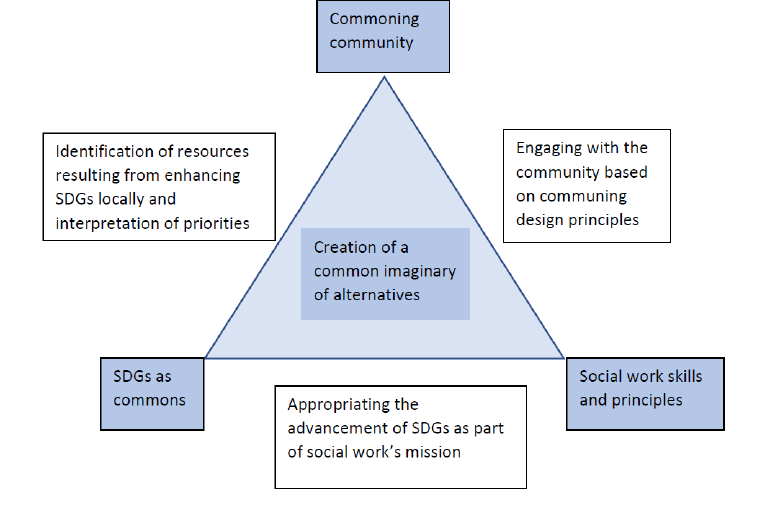
Fig. 1 Analytical triangle SDGs as commons
The driving force to engage a community in commoning SDGs is the creation of a common imaginary of alternatives.
According to Stroude (2021, p. 124), the imaginary can be defined as «the meaningful universe that surrounds us and gives meaning to our emotions, thoughts, and actions». Distancing oneself from prevailing norms and imagining alternatives does not simply constitute an intermediate social position — combining adherence and rejection, or commitment and distancing. Rather, such positioning and the resulting practices emerge from a gradual transformation of the individual’s imaginary, which is itself shaped through interaction with collective experiences.
In schematic terms, the exploration of alternatives is grounded in the dichotomy between the desirable and the undesirable, accompanied by a dual movement: the decolonization of conventional patterns of thought and the creation of alternative imaginaries. These two processes are interdependent; at the level of the imaginary, decolonization cannot occur without some form of «recolonization». Here, decolonization refers to the critical questioning and conscientization of hegemonic configurations of power — economic, political, and cultural — that shape thinking patterns, aspirations, and individual and community identities. Recolonization of the imaginary, by contrast, involves grounding new visions in local territories, knowledge systems, spiritualities, practices, and solidarities, while remaining attentive to global interdependencies (Stroude, 2021, p. 132).
Through this dual movement, images of potential futures gradually take shape, and individuals begin to understand the roles they might play within them (Stroude, 2021, p. 25). Facilitating the sharing of these imaginaries and envisioned futures allows for the emergence of a collective imaginary — an essential driver for sustainable futures that respect both social and environmental thresholds.
The relationship between social work and the SDGs as commons is mediated through these collective imaginaries and the profession’s evolving orientation toward contributing to SDG advancement. Social work connects with communities engaged in commoning through the skills, values, and principles it brings to participatory deliberations around specific SDGs. Communities that frame SDGs through the lens of the commons must actively participate in collectively interpreting priorities and determining the modalities that are meaningful, feasible, and sustainable within their local context. Social work, therefore, facilitates both the articulation and implementation of these locally grounded, collectively defined pathways toward achieving the SDGs.
Design principles for commoning, as spelled out by Ostrom 1990 (as cited in Helfrich & Bollier, 2015) articulate 8 points:
- Boundaries: There are clear and locally accepted boundaries between legitimate users and non-authorized users regarding a specific common resource system.
- Congruence: The rules for the appropriation and reproduction of a resource correspond to local and cultural conditions.
- Collective decisions: Most of the people affected by a resource system can participate in decisions on determining and changing the rules of use.
- Monitoring of users and the resource: There must be sufficient, accountable control over resources to prevent rule violations.
- Graduated sanctions: Sanctions imposed should be proportionate to the problem caused.
- Conflict resolution mechanisms: Conflict resolution mechanisms must be situated, quick, inexpensive and direct.
- Recognition: A minimum level of state recognition of the right of users is required, to determine their own rules.
- Embedded institutions (for large resource systems): If a common resource is closely linked to a large resource system, governance structures are «nested» at several levels (polycentric governance).
The implementation of these design principles corresponds to social work ethical principles (IFSW, 2014) and social work interventions of mediation, moderation, facilitation in respect of community dynamics to establish a common charter around a valued resource (material or immaterial).
Illustrative examples
In this section, I apply the analytical triangle involving SDGs as commons to concrete interventions at different scales. The descriptions of the cases are structured in context, mandate and the application of the categories of the analytical triangle.
Local-level: Re-design of an urban street-market in India
The first example is contextualized in an urban setting in the metropolitan city of Bangalore, India, and concerns the redesign and co-management of an urban street market. This market is an important livelihood source for formal shopkeepers and informal street vendors, while also serving neighborhood customers and devotees participating in the area’s cultural and temple circuit. The market sells fruits, vegetables, and flowers and is known for its high quality, drawing customers from middle- to upper-class social groups. Street vendors are not formally organized; although there is a registered Dalit association in the area, the vendors organize themselves along trade lines — flowers, vegetables, fruits, and plastic goods — with informal leaders emerging from families that have traded in the market for generations. These leaders are experienced in navigating the political and social fabric of the area and maintaining relationships with long-standing customers.
The project mandate came from an European public international cooperation agency, which hired «market management consultants» including staff from a local NGO: a social and environmental activist, a social work-trained researcher, and a community worker. The objective was to develop a comprehensive street market management system to ensure efficient use of facilities and services, while adequately responding to the needs of market users. The system was intended as a replicable model for other urban street markets in the city and beyond. It was to be devised through participatory methods, incorporating inclusive social, hygiene, sustainability, and gender standards.
To frame the case, the consultants first conceptualized the urban market as a common good, linking SDG 8 (Decent Work & Economic Growth), SDG 11 (Sustainable Cities and Communities), and SDG 12 (Responsible Consumption and Production). This approach shifted the focus away from tensions between formal shopkeepers and informal street vendors and toward the vending community as a collective stakeholder in redesigning and managing the urban space. The community, however, was highly divided along lines of trade, formality, gender, political affiliation, and seniority. While the intervention sought to provide equal opportunity for all members to voice their perspectives, informal street vendors were often less recognized by established shopkeepers and bureaucrats.
An opportunity to foster an alternative imaginary arose when the cooperation agency allocated funds for an exploratory visit to the Ima Keithel (Mother’s Market) in Manipur, a city in Northeast India. A delegation of 15 — including consultants, bureaucrats, shopkeepers, and street vendors — visited the market, which had been previously highlighted in a global review as an example of a self-governed, partly pedestrianized street market. Ima Keithel is a legendary market space run exclusively by women, functioning as a political, educational, and entrepreneurial hub. It is organized according to commons governance principles, supporting livelihoods across the region by providing a market for agrarian and artisanal products, and has developed significant socio-economic and political influence over time (Rao Dhananka & Saldanha, 2021).
During the visit, the women vendors from Bangalore witnessed an alternative to their everyday experience of marginalization. They observed the female leaders’ dignity, self-confidence, and successful self-organization, which commanded respect even from local male politicians. This experience enabled them to decolonize the stigma of being «poor street-vending women» and recolonize their imaginary with a vision of empowered street vendors directing their own development.
Inspired by this exposure, the women in the Bangalore market organized themselves into a street-vending association, creating a visible, collective voice to engage with the state and participate in decisions about the market’s redesign and management.
Global-level example: The People’s Global Summit – Co-building a new eco-social world: leaving no one behind 2022
The emergence of the initial idea for a global people’s summit grew from the pandemic experience, in which professionals considered by now «essential», were forced to work beyond their own silos and to demand that alternative futures be made possible. Indeed, IFSW co-signed with the federation of health workers an open letter addressed to the president of the G7 Summit 2021 demanding representation at the G7 summit of health, primary care and social workers to overcome the COVID-19 pandemic. The letter signed by the global federations of these professions represented hence the voice of over 160 million professionals worldwide (IFSW, 2021c). This action demonstrated to IFSW that other professional federations had similar concerns and that together they could have some bargaining power in post-pandemic times.
The People’s Global Summit, held online on 29 June – 2 July 2022, was initiated by 26 diverse global organizations representing hundreds of millions of people, co-led by IFSW and UNRISD. The Summit gathered people from across the world, bridging movements for justice, «to create new ways to work together for sustainability and quality of life for all» (People’s Global Summit, 2022). The People’s Global Summit acknowledged the inspiration provided by community-led social and ecological movements, as well as the wisdom of Indigenous communities worldwide (Rao Dhananka et al., 2023).
With this distinctive professional background, IFSW co-led a unique partnership to convene the People’s Summit through an inclusive process, which brought about the People’s Charter. The process was based on social work principles to promote diversity for action, modalities of facilitation for expressions for all and self-determination.
- «First, it enabled a variety of actors to come out of the silos to work together and co-ideate and co-construct in recognition of indigenous and grassroots knowledge.
- Second, it involved transnational organizations, movements, federations and coalitions across sectors, professions, geographies and faiths bringing together fine-grained knowledge and lived experiences that were mutually recognized and valued in view of co-constructing a vision for a new eco-social world.
- Third, the virtual opportunity of the current digital age was leveraged to invite contributions in a variety of formats including academic presentations, blogs, storytelling, panel discussions, TikTok videos, poetry and research from all over the globe, making it more inclusive» (Rao Dhananka et al., 2023).
The lessons from these sessions were consolidated by a diverse core group into the People’s Charter, conceived as «a living document and a reference point that will grow as the world’s populations share their solutions to our joint challenges». According to the People’s Charter for an Eco-Social World, achieving a sustainable future requires co-developing reciprocity and joint ownership of positive change, co-building peace, co-living with nature, co-creating social justice, and co-realizing equality (People’s Global Summit, 2022).
Both the process and the outcome of the charter were exemplary. It draws on diverse voices while articulating a shared imaginary of a desired eco-social world grounded in interconnected and holistic understandings, informed by Indigenous worldviews such as Ubuntu and Buen Vivir. The charter delineates common values and recognizes the rights of nature alongside the rights and responsibilities of people, affirming that equality, social justice, peace, and solidarity must be co-realized to achieve a sustainable future. It also outlines adaptable pathways for action that can evolve and be applied in local contexts while retaining core values and aspirations (People’s Global Summit, 2022). The Summit itself demonstrated how diverse actors — including communities, civil society, NGOs, and professional groups — can collaborate to achieve meaningful and sustainable outcomes (Rao Dhananka et al., 2023).
In this example, the «commoning community» was the global community collectively working toward a shared imaginary of a post-pandemic world that is just and sustainable. The charter functions as a resource to guide action and reflection. Social work’s expertise in facilitating participatory deliberations and creating equitable conditions for all voices was critical to the global-scale dialogue that produced the charter. This collective effort culminated in the handover of the People’s Charter to the United Nations High-Level Political Forum in the summer of 2022.
Way forward
The aim of this paper was to articulate the relationship between social work and the SDGs within a commons framework and to propose a theoretically grounded analytical triangle to support the analysis, steering, and framing of bottom-up initiatives targeting specific SDGs.
The illustrative examples demonstrated the importance of local interpretation of SDG priorities, facilitated by social workers and other actors who engage in and support commoning activities according to design principles. Social work contributes essential ethics, skills, and competencies to co-shape a collective imaginary, guiding communities in envisioning and implementing sustainable futures. Indigenous cosmovisions offer a valuable resource for expanding this imaginary beyond anthropocentric perspectives and linear, growth-oriented Western development paradigms.
As van Norren (2020) explains, indigenous cosmovisions are grounded in collective interest, biocentrism, cyclical processes, cooperation, communal duties and rights, markets based on use value rather than speculative value, spirituality, life-fulfilling work, earth governance, and restorative justice. She argues that integrating these perspectives into global development agendas beyond 2030 is essential for achieving truly inclusive and sustainable development.
IFSW has begun to diffuse such visions into social work practice through thematic World Social Work Days (Ubuntu 2021, Buen Vivir 2023), publications, and the activities of the Indigenous Commission. However, the political economy of knowledge production and dissemination remains a significant barrier to fully embedding these perspectives.
Social work has the potential to advance genuinely inclusive development agendas in several ways. First, through education that highlights the interconnected nature of eco-social challenges and the potential of commons-based frameworks and design principles. Second, by decolonizing its professional imaginary, expanding modalities of intervention beyond individual-level casework to encompass community-level practice across diverse fields. Third, by engaging with multiple cosmovisions to decenter established approaches and enrich practice. Fourth, by participating in macro-level social work, seeking to influence policies that shape future interventions at scale.
Bibliography
Beck, U. (1986). Risikogesellschaft. Auf dem Weg in eine andere Moderne. Suhrkamp Verlag.
Bottici, C. (2021). Ecofeminism as decolonial and transindividual ecology. (DES)TROCOS: Revista de Pensamento Radial, 2(2).
Deepak, A., & Mathbor, G. M. (2023). Climate change, environmental justice, and sustainable development in social work. In D. Madhanagopal & B.R. Nikku (Eds.), Social work and climate justice: International perspectives. Routledge.
Dominelli, L. (2012). Green Social Work: from Environmental Crises to Environmental Justice. Polity Press.
Fukuda-Parr, S., & Muchhala, B. (2020). The Southern origins of sustainable development goals: Ideas, actors, aspirations. World Development, 126, 104706. https://doi.org/10.1016/j.worlddev.2019.104706
Government of Costa Rica. (n.d.). Puente to development: National strategy for poverty reduction.
Helfrich, S., & Bollier, D. (2015). Die Welt der Commons. Muster gemeinsamen Handelns. Heinrich-Böll-Stiftung.
International Federation of Social Workers IFSW (2014). Global definition of social work. https://www.ifsw.org/what-is-social-work/global-definition-of-social-work/
International Federation of Social Workers IFSW (2018). End of year report 2018. https://www.ifsw.org/about-ifsw/
International Federation of Social Workers IFSW (2020). End of year report 2019. https://www.ifsw.org/about-ifsw/
International Federation of Social Workers IFSW (2021a). End of year report 2020. https://www.ifsw.org/about-ifsw/
International Federation of Social Workers IFSW (2021b). Social work and the United Nations Sustainable Development Goals. https://ifsw.org/new-policy-paper-social-work-and-the-united-nations-sustainable-development-goals-sdgs/
International Federation of Social Workers IFSW (2021c). Coalition letter. https://www.ifsw.org/wp-content/uploads/2021/04/Coalition-letter-to-G7-1.pdf
International Federation of Social Workers IFSW (2022a). End of year report 2022. https://www.ifsw.org/about-ifsw/
International Federation of Social Workers IFSW (2022b). The role of social workers in advancing a new eco-social world. https://ifsw.org/the-role-of-social-workers-in-advancing-a-new-ecosocial-world
International Federation of Social Workers IFSW (2023). End of year report. https://www.ifsw.org/about-ifsw/
Jones, D.N. (2018). Promoting community and environmental sustainability. International Social Work, 61(4), 471-475. https://doi.org/10.1177/0020872818770562
Krings, A., Victor, B. G., Mathias, J., & Perron, B.E. (2020). Environmental social work in the disciplinary literature, 1991–2015. International Social Work, 63(3), 275-290. https://doi.org/10.1177/0020872818788397
Liu, E., & Hanauer, N. (2016). Complexity Economics Shows Us Why Laissez-Faire Economics Always Fails. Evonomics. https://evonomics.com/complexity-economics-shows-us-that-laissez-faire-fail-nickhanauer/
People’s Global Summit. (2022). Co-building a new eco-social world: Leaving no one behind. https://newecosocialworld.com/the-peoples-charter-for-an-eco-social-world
Peeters, J. (2012), The place of social work in sustainable development: Towards ecosocial practice. International Journal of Social Welfare, 21, 287-298. https://doi.org/10.1111/j.1468-2397.2011.00856.x
Peeters, J. (2017). Promoting Sustainability by a Paradigm Shift towards Commons. In M. Rinkel & M. Powers (Eds.), Social work promoting community and environmental sustainability: A workbook for social work practitioners and educators. IFSW.
Powers, B.M.C.F., & Peeters, J. (2019). Sharing to flourish: A degrowth approach to provisioning for prosperity. In M. Powers & J. Peeters (Eds.), Social work promoting community and environmental sustainability: A workbook for social work practitioners and educators (Vol. 3, pp. 172-193). IFSW.
Rao Dhananka, S., & Saldanha, L. (2021). Imagining street-markets as urban commons: The mother’s market in Manipur. The Urban Transcripts Journal, 4(2). https://journal.urbantranscripts.org/article/imagining-street-markets-as-urban-commons-the-mothers-market-in-manipur-swetha-rao-dhananka-and-leo-f-saldanha/
Rao Dhananka, S., Deepak, A., & Cordoba, S. (2023). Social work, people’s assemblies and the creation of new eco-social contracts. Paper presented at Exploring Pathways for the United Nations: UNRISD Global Policy Seminar for a New Eco-Social Contract.
Raworth, K. (2017). Doughnut Economics: Seven Ways to Think Like a 21st-Century Economist. Random House.
Stroude, A. (2021). Vivre plus simplement. Analyse sociologique de la distanciation normative. Presses de l’Université Laval.
Truell, R. (2018). Social work is booming worldwide because it’s proven to work. The Guardian. https://www.theguardian.com/society/2018/jul/02/social-work-booming-worldwide-costa-rica
United Nations (2025). The Sustainable Development Goals report 2025. https://unstats.un.org/sdgs/report/2025/
United Nations Research Institute for Social Development – UNRISD. (2022). Crisis of inequality: Shifting power for a new eco-social contract. https://doi.org/10.18356/9789290851332
Van Norren, D.E. (2020). The Sustainable Development Goals viewed through Gross National Happiness, Ubuntu and Buen Vivir. International Environmental Agreements: Politics, Law and Economics, 20(3), 431-458. https://doi.org/10.1007/s10784-020-09487-3
Dhananka, S.R. (2026). Social Work and the SDGs as Commons: Building Collective Imaginaries for Sustainable Futures. Relational Social Work, 10(2), 114-132, doi: 10.14605/RSW1022606.

Relational Social Work is licensed under a Creative Commons Attribution-NonCommercial-NoDerivatives 4.0 International License