Recognizing and improving Soft Skills in Social Work
Sibilla Marinella
Contemporary society, especially after the pandemic, is experiencing a profound transformation, characterized by an acceleration towards the digital transition, which represents great opportunities and new challenges.
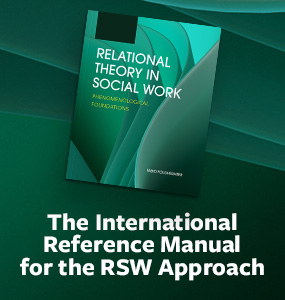
Digitalisation is redesigning the methods of interaction, communication and support within communities, highlighting the need for a transition from the classic concept of welfare to a broader concept of well-being, which is not limited only to material support but also embraces dimensions psychological, social and relational promoting a holistic vision of well-being. Relational social work emerges as a response to new needs, placing emphasis on the importance of soft skills, also defined as transversal skills: empathy, communication, adaptability... are essential for operating in increasingly complex contexts. The approach is interdisciplinary, integrating knowledge from different areas to prepare professionals to manage change effectively and sustainably. Training at all levels must take this variable into account and the relational social work achieved allows for the activation of a proactive and inclusive process of co-construction of well-being.
The digital transition, which has the potential to improve the quality of life, represents the key to promoting a resilient and cohesive society, capable of responding to the challenges of the present and future.
Keywords
Soft Skills, Relational Social Work, Well Being, Resilience, Digital Transition.