Understanding the facilitation of Community Future Dialogues through the Relational Social Work paradigm. Findings from an Italian study
Paola Limongelli
Università Cattolica del Sacro Cuore, Italy
Valentina Calcaterra
Università Cattolica del Sacro Cuore, Italy
Camilla Landi
Università Cattolica del Sacro Cuore, Italy
CORRESPONDENCE:
Paola Limongelli
e-mail: paolaenrica.limongelli@unicatt.it
Abstract
This article explores the role of facilitators in Community Future Dialogues (CFDs), a dialogical method rooted in the Finnish tradition and adapted to the Italian context to support participatory planning in community social work. Grounded in the Relational Social Work paradigm, CFDs aim to foster inclusive decision-making processes by engaging citizens, professionals, and institutions in envisioning desirable futures and co-designing concrete action plans. Drawing on a quali-quantitative study conducted across ten CFDs involving 126 participants and five trained facilitators, the research investigates how facilitation functions are enacted and perceived. Findings highlight the centrality of facilitation (i.e. relational guidance) in creating dialogical spaces that promote trust, reflexivity, and shared responsibility. Facilitators are shown to play a dual role: guiding the process while ensuring clarity and accessibility through transcription and reformulation. The study reveals a strong convergence between facilitators’ and participants’ perspectives, particularly regarding the effectiveness of dialogical methods, rule-setting, and future-oriented visioning. Challenges such as time constraints, participant fatigue, and institutional limitations are discussed, alongside strategies to enhance inclusivity and adaptability. The article concludes by positioning CFDs as a promising tool for community empowerment and social change, emphasizing the importance of professional reflexivity and co-facilitation in sustaining participatory processes.
Keywords
Community social work, Community Future Dialogue, Facilitation, Relational guidance, Dialogical methods.
Introduction
Community social work is a professional field of social work that supports people within a community to connect with each other, recognise shared concerns and needs, and collaborate on designing and implementing social interventions to address issues they are interested in (Payne, 2020; Twelvetrees, 2006; Karagkounis, 2021). According to the literature (Rambaree et al., 2019; Twelvetrees, 2017), the aim of community work is to promote the well-being of all community members. In literature (Mayo, 2002), there are two meanings used to define community: local community and community of interests. The first interpretation of community refers to a shared physical space, understood as the entirety of social ties rooted in belonging to a common geographical area. This includes relationships among individuals living in the same apartment complex, neighborhood, or village. The second interpretation sees community as the network of connections based on shared interests or experiences — such as common passions, ethnic, cultural or linguistic identity, similar life stages, or shared challenges.
The active participation of community members in defining goals, planning, and implementing actions enriches social work practices. This is achieved by fostering community empowerment and enhancing the effectiveness, sustainability, and cultural appropriateness of interventions (Twelvetrees, 2006; Lightfoot et al., 2014; Matthies, 2021; Sjöberg et al., 2014). However, the path towards genuine collaboration and participation is often fraught with challenges. Community social workers often face structural power imbalances, conflicting goals, potential conflicts of interest, and intricate community relationships that can impede collaborative initiatives (Panciroli, 2017; Popple, 2015). To address these challenges, practitioners may adopt collaborative methodologies that facilitate participation and guide the planning phase, offering inclusive frameworks that enable all stakeholders to contribute meaningfully (Arnkil, 2018; Brown & Isaacs, 2005; Jarldorn, 2018; Landi et al., 2024; Lightfoot et al., 2014). A significant example is represented by Community Future Dialogue (CFD), a dialogical method of Finnish origin, recently piloted in the Italian context. CFD is designed to guide participatory and relational decision-making and planning processes in response to community concerns, involving community members themselves (Landi, 2017; Landi et al., 2024). This article provides a theoretical overview of the CFD methodology and presents insightful reflections on the function of relational guidance (Folgheraiter, 2023; Landi et al., 2024) performed by facilitators of dialogical decision meeting, based on qualitative and quantitative research data.
Community Future Dialogue: a future-oriented method to work with communities
Community Future Dialogue (CFD) represents an innovative method for participatory planning of social interventions in response to emerging shared concerns within a community. Originating from Finnish dialogical practices, CFDs are inspired by the Future Dialogue method (Seikkula & Arnkil, 2006). The theoretical foundations of CFDs align with the principles of Relational Social Work paradigm (Folgheraiter, 2004, 2023) and with «relationship-based, strengths and solution-focused» approaches in Social work (Healy, 2022). CFDs share with the Future Workshop method (Jungk & Müllert, 1987) a three-phase structure: critical analysis of the present, envisioning a desired future, and identifying strategies for change. However, CFDs are distinguished by their more structured format, which unfolds within a single deliberative session.
CFD method is grounded in mutual recognition, collaboration, and participatory democratic decision-making, fostering the active involvement of community members in defining strategies aimed at collective well-being (Folgheraiter, 2023). CFDs emphasize the strengths and experiential knowledge of participants (Borkman, 1976; Beresford & Carr, 2012; Wilken & Cabiati, 2024), supporting processes of community care and collaboration with institutional social services (Dominelli, 2002).
CFD sessions are facilitated by two professionals and begin with a preliminary assembly to share concerns and define objectives. Participants are invited among those who expressed interest and willingness to care for their community (Panciroli, 2017), during the profiling phase carried out by community social workers (Twelvetrees, 2006; Hawtin & Percy-Smith, 2007; Hillier, 2007).
The dialogical meeting unfolds in three main phases (Seikkula & Arnkil, 2013). The first phase involves sharing concerns and collectively defining the purpose of the meeting. Community social work projects may pursue different goals, which in the literature are categorized into three main areas (Mayo, 1994, 2009; Dominelli, 2004; Folgheraiter, 2017; Panciroli, 2017; Twelvetrees, 2017): fostering relationships between community members (community development), addressing difficulties or crisis events (community problem solving), or planning and implementing innovative social services with the active participation of community members (social service community planning). At the beginning of the session, the following rules are explicitly stated to encourage constructive and respectful dialogue (Landi et al., 2024): (1) express your unique and personal point of view directly; (2) refrain from commenting while another person is speaking; (3) listen attentively to other participants.
The setting is circular, encouraging each person to speak in the first person and to actively listen to others. These rules facilitate the emergence of deep internal conversations (Archer, 2003), reducing the risk of delegation, criticism, or recrimination.
In the second phase, known as «envisioning the desired future», the group is invited to imagine a time in the future when the community’s situation has significantly improved. Participants choose a specific date in the future and, with the support of the facilitators, envisage that the positive change has already occurred. From this future perspective, each participant is asked to answer three key questions: (1) What is the situation for you and your community now that things are going well? (2) What did you do, who helped you within your community, and how did you achieve this change? (3) Thinking about your community, what used to worry you and what helped reduce those concerns?
One of the facilitators records the responses visibly for all participants. This process allows current difficulties to be reinterpreted from a future-oriented perspective and helps identify concrete actions that each person could take to support change. Professionals are usually interviewed last, so that the concept of well-being primarily emerges from community members (Landi et al., 2024).
In the final phase, a concrete action plan is developed based on the ideas that emerged during the interviews. The plan is structured using the formula «who will do what and with whom» and is distributed to all participants (Landi, 2017). Implementation is entrusted to the participants, with support from community social workers. Facilitators are not involved in the implementation phase but may help if difficulties arise. It is important that participants are aware that the implementation process may encounter challenges and require adjustments along the way.
In recent years, several projects in the Italian context have experienced CFDs for the participatory planning of community interventions. The experiences and research data highlight the generative power of the method, thanks to structured facilitation, participant motivation, and rules that promote active listening and mutual respect (Landi, 2017; Calcaterra et al., 2023; Landi et al., 2024). The method fosters dialogue among individuals with diverse roles and backgrounds, promoting empowerment, active citizenship, and relational planning.
Facilitators as Relational Guides in Community Future Dialogue
In CFD, those who facilitate the meeting (usually professionals) play a crucial role in creating and sustaining a dialogical space that promotes communication, reflexivity, and the co-construction of future-oriented perspectives. They are professionals skilled in collaborative practices and dialogical methods, capable of guiding the process without directly influencing decisions (Seikkula & Arnkil, 2006, 2013). They work in pairs, with distinct yet complementary roles — one facilitates the dialogue while the other transcribes participants’ contributions — but both actively collaborate and support each other throughout the facilitation process. Their independent position in relation to the situation being addressed ensures that each participant can express their viewpoint and be heard (Arnkil, 2018). Facilitators do not offer solutions or advice; instead, they pose guiding questions that stimulate reflection and creativity, helping participants articulate concerns and hopes while listening to others’ perspectives (Calcaterra et al., 2023).
From the preparatory phase, facilitators offer consultation on defining the concern motivating the meeting, the appropriateness of dialogical practice as a method for addressing the shared concern, the feasibility of the session, selecting participants, and arranging space and technical aspects.
During the session, facilitators clarify meeting rules, ensure they are respected, and foster a welcoming, non-judgmental, and playful atmosphere. Their ability to joke and imagine is integral to their role, as it encourages the envisioning of desirable futures and stimulates active engagement.
Following the methodological steps, facilitators help participants project themselves into a future time in which current difficulties have been overcome, encouraging first-person narratives and the exploration of coping strategies. They then help participants to develop a shared action plan, making sure that the language used is accessible and easy for everyone to understand.
According to Marsh and Crow (1998), the competencies required of facilitators include human qualities (openness, acceptance, trust), organizational skills (flexibility, attention to detail, problem-solving abilities), and communication skills (active listening, clarity, reformulation, and the ability to maintain attention).
During the session, the facilitators act as «relational guides» (Folgheraiter, 2004, 2023), because they intentionally and consciously facilitate communication and collective action among participants who are committed to achieving a shared goal. This allows the catalization or reinforcement of the coping network, helping it to recognise itself as such, to focus on obstacles and resources, and to value its achievements (Folgheraiter & Raineri, 2017, 2023).
Through dialogue, facilitators stimulate both external and internal polyphony (Seikkula, 2022) by involving and giving voice to all participants. They also support each participant in expressing their own subjective points of view and experiences, thereby stimulating rich internal conversations. They use techniques such as reformulation (Rogers & Kinget, 1969; Mucchielli, 1983; Carkhuff, 1987) to clarify and communicate emerging content. So, they transform difficulties into shared problems and conflicts into issues to be addressed collectively.
Folgheraiter and Raineri’s (2023, p. 14) metaphor of the Alpine guide style aptly describes the role of facilitators: although they do not know the exact path or final destination, they can orient themselves, recognise signals and accompany the group on an exploratory journey towards an ethically shared goal. Initial uncertainty is an essential part of the process, challenging yet necessary to stimulate participants’ agency and the collective construction of change.
Methods
This article presents the results of a quali-quanti research conducted within 3 projects promoted by the «Relational Social Work» Research Centre of Università Cattolica del Sacro Cuore, aimed at testing the use of Community Future Dialogues (CFDs). Implemented in northern Italy in partnership with local authorities and no-profit organizations, the projects shared a common theoretical framework and research methods and were carried out between 2019 and 2022. In total, 10 CFDs were organized, each preceded by a preparatory plenary meeting, with an average duration of about two and a half hours. Overall, 126 individuals took part in the CFDs, representing a range of roles from citizens to public administrators (Table 1).
|
CFD |
Code facilitator interviewees |
Future time (in months) |
Type of Community involved |
CFD aim |
Participants (n) |
Online/in-person mode |
|---|---|---|---|---|---|---|
|
1 |
CFD_P1_F1 |
12 |
Local community |
Regenerating the most rundown areas of the neighbourhood and fostering a sense of community |
12 |
Online |
|
CFD_P1_F2 |
||||||
|
2 |
CFD_P2_F1 |
10 |
Community of interest |
Promoting better collaboration and communication between school and family |
12 |
Online |
|
CFD_P2_F2 |
||||||
|
3 |
CFD_P3_F1 |
19 |
Community of interest |
Promoting dialogue and collaboration between the social services and the local community |
8 |
In person |
|
CFD_P3_F1 |
||||||
|
4 |
CFD_P4_F1 |
9 |
Community of interest |
Promoting the social inclusion of families with children with disabilities |
10 |
In person |
|
CFD_P4_F2 |
||||||
|
5 |
CFD_P5_F1 |
6 |
Group |
Promoting socialisation among children and young people with disabilities |
10 |
In person |
|
CFD_P5_F2 |
||||||
|
6 |
CFD_P6_F1 |
8 |
Community of interest |
Increasing opportunities for families with young children to meet and socialise |
11 |
In person |
|
CFD_P6_F2 |
||||||
|
7 |
CFD_P7_F1 |
8 |
Local community |
Taking care of the neighbourhood and promoting a greater sense of responsibility among residents |
12 |
In person |
|
CFD_P7_F2 |
||||||
|
8 |
CFD_DEL_F1 |
12 |
Local community |
Promoting community development and social inclusion for families with a migrant background |
18 |
In person |
|
CFD_DEL_F2 |
||||||
|
9 |
CFD_MOR_F1 |
16 |
Community of interest |
Promoting youth participation in the definition/implementation of youth policies at local level. |
17 |
In person |
|
CFD_MOR_F2 |
||||||
|
10 |
CFD_SER_F1 |
18 |
Local community |
Promoting youth participation in the definition/implementation of youth policies at local level. |
16 |
In person |
|
CFD_SER_F2 |
Table 1 Description of the Community Future Dialogues (CFDs)
Each session was co-facilitated by two professionals, for a total of 5 social workers with expertise in dialogical methods.
For each CFD, the research design included a set of activities intended to document and analyze from multiple perspectives both the process and the outcomes of participatory planning.
An interest of the research was to explore the role of facilitators with the following research questions: «how is the facilitation function carried out in a CFD? What critical issues arise, and which methodological strategies support the effective guidance of a CFD?».
At the conclusion of each dialogue session, facilitators filled out self-administered questionnaires composed primarily of closed-ended items. Their perceptions regarding facilitation functions were assessed using a five-point Likert scale (1 = «Strongly disagree», 5 = «Strongly agree»). The functions explored included reformulations and summaries provided during the sessions; encouraging participants to speak in the first person and articulate their personal perspectives; offering support to envision a better future; using clear and accessible language; and clarifying and ensuring adherence to the agreed-upon rules.
In addition to the scaled items, the questionnaire included open-ended questions aimed at capturing the challenges encountered and the elements that supported facilitation — both during the initial phase of the dialogue and in the stage dedicated to designing the action plan.
A total of 20 questionnaires were collected (two for each CFD). All facilitators were female social workers aged between 30 and 40 years. Most held a PhD and had professional experience in personal social services. They were trained in the Relational Social Work approach (Folgheraiter, 2023), experienced in facilitation processes, and had previous involvement in CFDs and community social work.
The study also drewon data from questionnaires administered to participants, which were structured in the same way as those for facilitators, except that they did not include open-ended questions. In total, 101 participants responded, mostly women, aged between 18 and 77 years (mean age = 40). They represented diverse roles: social workers and professionals (20), community members (59), religious staff (1), local politicians (3), and 17 community workers.
Finally, the analysis investigated how relational guidance influenced the dynamics of the CFD, participants’ engagement, and the outcomes of the dialogues. Quantitative data were analyzed descriptively, while qualitative data were examined using content analysis (Braun & Clark, 2006). Three researchers were involved in the qualitative analysis. For the first round of the analysis, the first author became familiar with the data by reading it in its entirety, taking notes while reading and generating codes for the data.
In the second round, the first author organized the codes and merged them into two key themes relevant to our research question. In the final phase, the first author, along with the other two researchers, engaged in discussions regarding their interpretations of the themes, collaboratively sharing their insights and conclusions to reach a consensus. During this discussion, the themes were examined through an analytical framework grounded in Social Work theories, with a specific emphasis on the principles of Relational Social Work paradigm (Folgheraiter, 2004, 2017, 2023).
Limitations and ethical considerations
The research was conducted in accordance with the Code of Ethics of Università Cattolica del Sacro Cuore (Rectoral Decree No. 9350/2011). Data collection and processing were carried out in accordance with the Code of Conduct and Professional Ethics for the Processing of Personal Data for Statistical and Scientific Purposes (Decision no. 2/2004 of the Italian Data Protection Authority). All people involved were informed by community workers and facilitators about the experimental and innovative nature of the adopted method, as well as the research and documentation activities in progress.
The CFDs involved people who were motivated to address collective concerns and adopt a caring attitude towards their community. Participants were identified during the initial community profiling phase (Panciroli, 2017), enabling potential collaborators to be invited to the sessions without launching a broad public information campaign. This recruitment method reduced the likelihood of involving other interested and available citizens, meaning that the data collected exclusively reflects the perceptions of individuals who were already motivated to work together. Furthermore, the relatively small number of cases and the contextual specificity of the issues addressed prevent the generalisation of the findings.
Findings
Facilitation functions in CFDs: facilitators’ and participants’ perspectives
The findings show a general satisfaction among the facilitators with respect to the facilitation functions performed. The mean scores for these key functions — previously outlined and discussed in more detail below — range from 4.25 to 4.55, indicating a high level of agreement among facilitators regarding how effectively these functions were carried out, in line with the adopted method. Of the various items analysed, the one concerning supporting participants in envisioning the desired future received the highest score (M = 4.55, SD = 0.60). This was followed by the item concerning the use of reformulation techniques and open-ended questions (M = 4.40, SD = 0.50). High values were also recorded for the item related to encouraging participants to speak (M = 4.25, SD = 0.64).
In contrast, lower scores were obtained for the item relating to avoiding self-centred speech (M = 2.35, SD = 1.66). The higher variability observed for this item suggests that facilitators have different views on this function. Lower values were also observed for the items «I did not intervene when the rules were broken» (M = 2.60, SD = 0.88) and «I used technical and specialist language» (M = 2.05, SD = 1.00). These outcomes can be viewed positively: the initial sharing of the rules reduced the need for subsequent reminders during the dialogical session, while the limited use of technical language encouraged the participation of citizens, users, and family members.
Overall, the findings demonstrate that the CFDs were carried out according to the principles of Relational social work approach. CFDs were designed to promote reciprocity and empowerment within the helping relationship.
Participants’ views confirm the findings reported by the facilitators. The majority of respondents acknowledged that the facilitators made the rules explicit, fostered communication, conducted individual interviews, and supported the drafting of the plan. The item concerning the facilitators’ support in guiding the group to define a future date and envision the desired future obtained the highest score (M = 4.83, SD = 0.40), with a clear prevalence of strong agreement among participants. Similarly, high scores were recorded for the facilitators’ commitment to clarifying the CFD rules (M = 4.81, SD = 0.39) and for their support in shaping a shared concern to be addressed (M = 4.80, SD = 0.77).
Strong agreement was also expressed on the items stating that the facilitators interviewed one person at a time (M = 4.78, SD = 0.48) and supported the group in drafting the plan (M = 4.62, SD = 0.59). Finally, the questionnaire included an item assessing the perceived clarity of what was expressed by other participants. This item yielded a markedly lower score (M = 2.64, SD = 1.55); nevertheless, it suggests that participants generally perceived communication within the group as clear and comprehensible.
In summary, there is clear convergence between the views reported by facilitators and those expressed by participants, particularly with regard to setting a date for the future, clarifying the rules and identifying issues to be addressed (Fig. 1).1 This suggests that the essential facilitation functions for the CFDs were successfully implemented by the facilitators and recognised and valued by the participants.
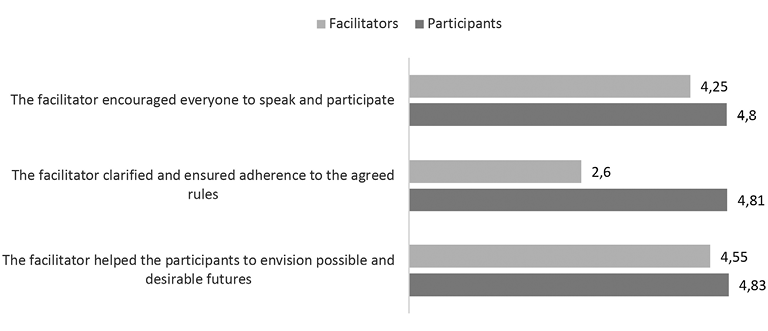
Fig. 1 Mean agreement scores of participants and facilitators on how the facilitation functions were performed (1 = strongly disagree, 5 = strongly agree).
The struggles of co-planning: critical issues in CFD facilitation
At the end of each CFD, the facilitators were asked to complete a questionnaire identifying what had supported or hindered the meeting. The questionnaire focused on the initial phase of the CFD and envisioning the desired future, as well as on the project planning phase.
One of the most important initial issues that facilitators encounter during the initial stages of the CFDs concerns the relational attitude, or «posture», with which people approached the experience. In some sessions, the meeting began with a sense of embarrassment. In others, the facilitators faced participants who were very distrustful, sometimes angry with each other, and confrontational.
I felt that there was a somewhat embarrassed atmosphere, although motivated and focused. (CFD_MOR_F1)
Participants were very angry with and often, without respecting speaking turns, expressed their grievances to the representative of the local authority who was present. (CFD_P7_F1)
In some cases, late arrivals or absences affected the start of the meeting reduced participants’ motivation, despite participants had previously declared an interest in taking part.
The dialogue started after the agreed time because half of the participants arrived 30 minutes late. This forced us to cut the final stage of the CFD [...] (CFD_SER_F1)
Two invited participants arrived late, when the dialogical session had already started, and I did not consider it appropriate to stop the future-oriented interviews to explain to them how we were working. (CFD_P4_F1)
Another issue raised by the facilitators was the participants’ acceptance of the proposed method. If some participants disagreed with the method’s validity and/or were unwilling to collaborate, this hindered the meeting’s progress, necessitating the issue’s containment or open discussion with the other participants.
[It was critical] the hostile and at times confrontational attitude of one participant in the Dialogue (although well managed by the facilitators). (CFD_DEL_F1)
Managing the relationship with one participant in particular was especially complex: he approached both the method and the people present with suspicion, very critical and not constructive. This was particularly difficult for me at the beginning. (CFD_DEL_F2)
Still regarding participants’ characteristics, facilitators reported difficulties in managing the initial part of the process in some cases, likely because participants found the proposed approach and some CFD rules — such as the need to anticipate a desired future and speak of it in the present — unusual and difficult to apply. In other cases, difficulties arose because some people had not attended the preparatory meetings, which aim to familiarise invitees with the process so they know the rules of engagement and the proposed method when they arrive on the day of the meeting.
Not all participants managed to make the leap into the future. (CFD_P3_F2)
The presence of some people who had not participated in the preparatory phase sometimes disrupted the dynamic by intervening inappropriately. (CFD_P7_F2)
In such situations, the facilitators reported that they intervened to ensure that everyone could continue to work together. They paid particular attention to those unfamiliar with the method and the rules necessary for the meeting to run smoothly.
According to the facilitators, participants’ age, skills and language barriers could limit their ability to express concerns and expectations for change. The questionnaires highlight this as a genuine concern, as illustrated by facilitators.
I was very worried that participants from ethnic minorities had not fully understood the logic behind the method. At times, I had the impression that foreign mothers had not grasped that we were working with imagination; sometimes, they thought that what we were imagining had already happened. (CFD_P2_F1).
We had to calibrate everything to match the actual attention span of the children and young people. (CFD_P5_F2)
The second phase of a CFD requires facilitators to guide participants in defining a concrete, present-oriented plan aimed at improving the situation. Based on the contents of the individual interviews conducted in the first phase, participants identify activities, timelines, and responsibilities.
The most frequently difficulty mentioned by facilitators in this stage was time management. Often, the initial phase of the CFD took too long, reducing the time available for defining the planned actions. In some cases, this meant writing the plan without contributions from all participants, as some left before the end.
The main difficulty was that the plan was not written with the full participation of everyone who had taken part in the CFD. (CFD_P1_F1)
Almost all participants gradually left before the meeting was fully concluded, and therefore could not adequately contribute to reviewing what had emerged in the first phase. The final stage of definition was thus carried out with only a small number of those directly involved. (CFD_P4_F2)
In the second part of the CFD, it seemed that the challenges related to distrust or a lack of knowledge had been overcome. However, facilitators expressed concerns about participants’ fatigue, which reduced their motivation and active involvement in defining the plan.
The children and young people were a bit tired, and some got distracted more easily. (CFD_P5_F2)
Everyone was in a hurry, they wanted to close the meeting, and so we devoted less time to drafting the plan. (CFD_DEL_F2)
Fatigue may exacerbate a difficult that is already a characteristic of the planning phase: the transition from envisioning change to defining concrete actions.
In general, we felt the effort of writing an operational program. Many ideas had been shared, but some were not very concrete, or at least difficult to achieve in the short term. The feeling was of writing a program that was too abstract. (CFD_MOR_F1)
To cope with these difficulties, the facilitators reported adopting a more directive approach to leading this phase of the work. They were aware of the importance of providing participants with a written, concrete plan, even if it was not yet fully detailed.
As highlighted below, facilitators considered the availability of community social workers to meet participants again at the CFD to refine the plan to be an important source of support.
At certain moments, I found myself playing a more directive role, inviting people to step forward in taking on some of the project actions, especially those of planning and monitoring. (CFD_P6_F1)
Facilitators also reported difficulties, such as limited decision-making autonomy of social workers attending the meeting, who were bound to seek prior approval from their managers.
Social workers from the neighbourhood could not freely say whether they could participate or not, because they first had to report and get approval from their managers. (CFD_P6_F2)
This situation arises when participants, who are involved due to their institutional role, do not have real decision-making power and are unable to take on responsibilities due to limited resources or decisions that are beyond their professional autonomy.
Motivation, Rules, and Setting: Supporting Facilitation in CFDs
The facilitation process was supported by the active involvement of community social workers, who played a key role in maintaining participants’ motivation and ensuring adherence to the agreed framework.
During the CFDs, they often referred to the content of the preparatory meetings, thereby helping to guide and refocus the ongoing discussion.
At certain moments, to ensure that the rules were respected, the community worker intervened to remind participants of the rules and agreements they had made during the preparatory meetings. (CFD_P7_F1)
Although the presence of discouraged or angry people was challenging, the participation of motivated people who were willing to collaborate and embrace change proved valuable, supporting the CFDs’ smooth progress.
The positive attitude of the participants, whom I found motivated, confident, and eager to come together to design. Participants generally respected the rules. (CFD_P4_F1)
I also found useful the intervention of some community members who spoke up to «calm down» participants who were very angry. (CFD_P7_F1)
The importance of the setting is another theme that emerges from the facilitators’ responses. Holding the CFDs in person, rather than online, facilitated smoother communication and better understanding, including through non-verbal language, which was useful for managing conflicts or awkward situations.
Being in person helped: the exchange of glances among participants to create relationships, to call on or involve others; the discussion was smoother than online. It was easier to use humor and to interact; the facilitators could observe more carefully the verbal and non-verbal interactions in the circle. (CFD_P3_F2)
The setting also proved relevant in terms of the choice of place. When the CFD was held in familiar or welcoming spaces, participants were able to feel comfortable, which fostered focused and high-quality discussion.
It’s important to choose a place that allowed us to have a dedicated moment for the CFD without distractions or interruptions.(CFD_P3_F1)
It definitely helped to hold the CFD somewhere that the group felt at ease. (CFD_P4_F2)
The dual role of facilitators in plan definition
Even during the second step of the process, CFDs require the constant presence of two facilitators, each performing the following tasks: guiding the dialogical process, transcribing and reformulating plan construction. The effective work of one facilitator supports the role of the other, and vice versa. Clearly, the greater the synergy and collaboration between the two practitioners, the smoother the process will be, and the easier it will be to overcome any difficulties that arise. When asked which elements had helped during the second phase of the work, the facilitators replied:
I would say the feeling with the other facilitator and the good time management of the CFD. (CFD_P6_F1)
The findings also emphasize the importance of transcription work, which is particularly useful for defining plans. The clarity of the text helps everyone visualise how the programme evolves during the CFD session.
While the facilitator is transcribing and carefully reporting what is said, both colleagues and participants can further develop ideas without losing important elements and everyone’s contribution is valued.
Certainly, the well-written text by the facilitator, projected during the CFD, was useful for building the project in a short time. Having the slides from the first phase of the dialogue available, the colleague supported me in structuring the program. (CFD_P3_F1)
One strategy that was experimented with was to draft a plan outline during a short break between phases to present to participants later. This made subsequent planning easier.
During the break between the first and second part, together with the other facilitator, I prepared a draft of the plan and then, with the participants, we filled it with content. (CFD_P1_F1)
It helped me to prepare a draft of the plan in advance that summarized the proposals that had emerged. This allowed people to organize their ideas and to specify some details more clearly. (CFD_SER_F1)
When facilitation is carried out effectively, participants tend to adhere to the method, contributing to the CFD’s smooth progress. This is reflected in compliance with the rules, active listening, reformulation of the contents of the discussion, and maintaining focus on the shared objectives.
I remember a precise moment when, after one of my reformulations, one of the young people asked me for clarification about what I had said. Another participant helped me by finding the «right words» to make the message understandable for young people with disabilities. During the meeting, it also happened that some participants supported the facilitators by reminding about the future tense, «correcting» verb tenses for those speaking, and summarizing in the project-writing phase. (CFD_P5_F1)
The results also show the group’s ability — by no means to be taken for granted — to suggest practical actions and consider involving other potential collaborators who are motivated to support the plan.
The fact that many people already knew each other and referred to concrete places and people favored the design of several actions. (CFD_P1_F2)
The good work already done in the first phase, which produced concrete, feasible, and coordinated ideas among different people, was very helpful in drafting the plan. The commitment and proactive attitude of some participants acted as a driving force. (CFD_DEL_F2)
As in the initial phase, the facilitators recognised the significant contribution of community social workers in the second phase of CFDs.
Their prior knowledge of the community enabled them to give the plan definition, helping participants to identify further collaborators to whom proposals could be presented and thus making plans feasible and sustainable.
The contributions of the community workers and other participants were certainly helpful in clarifying some open issues and creating connections among the various project actions imagined in the first phase. Those who know the community can play a very important role in collective planning processes, as facilitators of relationships and brokers of resources. (CFD_MORB_F1)
Moreover, as mentioned, the community workers provided valuable support to all CFD participants, including facilitators, in situations where the limited time of the dialogical session did not allow for detailed reflection on the written program. They offered to meet participants later to review the plan and integrate or specify it as needed.
The presence of the community workers, who will complete the definition of implementation timelines and more specific assignments, was essential, since this work could not be done at the end of the dialogue because of participants’ fatigue and time constraints. (CFD_P2_F2)
Discussion
The research shows that in the CFD studied facilitators played a role of relational guidance, in line with the concept developed within the Relational Social Work paradigm (Folgheraiter, 2004, 2023). This role significantly shapes participation and the outcomes of the process. The perceptions of both facilitators and participants highlight that the quality of facilitation — understood as the ability to build trust, clarify rules, and support the group in constructing a shared future and defining a plan of interventions — represents a crucial element for the overall effectiveness of the method. In this sense, the role of the facilitator recalls the metaphor of the Alpine guide (Folgheraiter & Raineri, 2023, p. 14): a competent and reliable presence who, though not knowing the exact path or final destination, can read signals, orient the journey, and accompany the group on an exploratory route toward a shared ethical goal, while leaving room for participants’ autonomous initiative.
A significant finding from the analysis is the convergence of perspectives between facilitators and participants: both groups recognize the importance of the main facilitation functions, particularly reformulation, use of open-ended questions (Rogers & Kinget, 1969; Mucchielli, 1983; Carkhuff, 1987), clarity of rules, encouragement to speak and foster communication, and support in envisioning the future. Moreover, findings show the importance of the role of facilitators in promoting participation of community members; citizens, family members, users, and volunteers felt listened to and included in the decision-making process valuing their experiential knowledge (Borkman, 1976; Beresford & Carr, 2012; Wilken & Cabiati, 2024). This attention is particularly important during the part of the meeting dedicated to drafting the plan: participants’ fatigue, the limited time remaining and/or the need to focus on other personal commitments can reduce their level of attention and motivation to actively participate in planning actions and decision-making processes relating to who will do what with whom in the near future.
Another point of discussion concerns the balance between methodological structure and flexibility. The data show that, while the theoretical indications of the method ensure rigor and coherence, the reality of communities requires constant adaptations. The challenges that emerged, such as delays, conflicts, linguistic or cognitive difficulties and limited autonomy of social workers, show that facilitation must be able to respond by maintaining a solid methodological framework while adapting it according to the people involved and the dynamics of the situation. This confirms the need to consider CFDs as a flexible process, rather than a rigid tool, which is nourished by flexibility, relationality, and professional reflexivity.
Another reflection concerns co-facilitation: the presence of two facilitators makes it possible to monitor more dynamics related to the structure and course of the CFD and, at the same time, to support the programming phase. Their roles are distinct yet complementary: one mainly facilitates the dialogue, while the other transcribes participants’ contributions, ensuring that content is clear and accessible. The transcription function, which at first sight might appear merely technical, instead proves crucial also from a methodological point of view, as it sustains cohesion, allows participants to concentrate on the expressed content, and strengthens the final phase of the CFD, often made more critical by participants’ fatigue and limited time available. This confirms that both facilitators, each with their own peculiarities, promote dialogue and reflexivity, favoring polyphony through collective dialogue (Seikkula, 2022). They guide the process without influencing decisions (Seikkula & Arnkil, 2006, 2013), as they maintain an independent role that enables each participant to express their ideas freely, without offering solutions. Moreover, these functions highlight the facilitators’ role in raising participants’ awareness about the role that could played by themselves, about the obstacles to be faced, and the resources available (Folgheraiter & Raineri, 2017, 2023).
The difficulties encountered in the final stage of CFDs highlight the importance of taking care of this phase, in which facilitators must support the group in the «return to the present» and in translating ideas into concrete actions. In this context, community social workers proved to be a valuable resource, contributing to making plans more concrete and connecting community resources and people, while also offering the possibility to conclude the plan definition in detail after the session. This highlights the connection between empowerment and the need for accompaniment (Folgheraiter, 2004, 2023): the more space is left to participation, the stronger becomes the need for support that prevents dispersion and ensures concreteness.
The research mainly involved motivated people, identified through the initial community profiling phase. This ensured a strong sense of ownership of the process but at the same time reduced the possibility of including more marginal or divergent voices. The risk is to strengthen the point of view and activism of only one part of the community, which, although positive, could not reflect the entire complexity of the local community. It is therefore crucial to explore how CFDs can be made more inclusive, fostering the participation also of those not immediately inclined to engage in dialogue and planning processes, and how facilitators can support this greater inclusivity of CFDs.
Furthermore, the question of how (or whether) facilitators should intervene when participants express anger, engage in conflict with others or demonstrate a lack of motivation to participate (e.g. arriving late or leaving early) remains open. It may be useful to identify principles and specific skills that could help facilitators deal with these types of situations, in order to support those who already perform facilitation functions and those who wish to train to do so. This could be a starting point for new empirical research into facilitators’ views on managing difficult moments during dialogue sessions.
Conclusion
The study emphasises the importance of relational guidance for the effective functioning of Community Future Dialogues, highlighting that the quality of facilitation is crucial in fostering dialogue among citizens and promoting social change through the active participation of motivated stakeholders (Folgheraiter, 2004; 2023). CFDs are therefore an innovative method for initiating virtuous processes within communities, capable of generating community empowerment and strengthening social cohesion (Twelvetrees, 2002; Lightfoot et al., 2014; Matthies, 2021; Sjöberg et al., 2014).
This is facilitated by the attitude of the facilitators, who do not view collaboration as a threat to their professional role, but instead allow community members and social workers to support them in the planning process (Folgheraiter, 2004, 2023). CFDs seem to be a promising methodological structure, capable of supporting participation processes, enhancing resources, and promoting a shared sense of responsibility among communities.
References
Archer, M. (2003). Structure, agency and internal conversation. Cambridge University Press.
Arnkil, R. (2008). Remembering the future: Future dialogue and the future of dialogising. In J. Lehtonen & S. Kalliola (Eds.), Dialogue in Working Life Research and Development in Finland (pp. 131-143). Peter Lang.
Arnkil, T. E. (2014). Open dialogue in relational practices. Respecting otherness in the present moment. Lavoro Sociale, 14(6), 15-22. https://doi.org/10.14605/LS14
Arnkil, T. (2018). Anticipation Dialogues. In R. Poli (Ed.), Handbook of anticipation: Theoretical and applied aspects of the use of future in decision making. Springer.
Bachtin, M. (1981). The dialogic imagination: Four essays. University of Texas Press.
Beresford, P., & Carr, S. (Eds.). (2012). Social care, service users and user involvement. Jessica Kingsley.
Borkman, T. (1976). Experiential knowledge: A new concept for the analysis of self-help groups. Social Service Review, 50(3), 445-456.
Braun, V., & Clarke, V. (2006). Using thematic analysis in psychology. Qualitative Research in Psychology, 3(2), 77-101.
Brown, J., & Isaacs, D. (2005). Conversation as a core process: Co-creating business and social value. Reflections: The Sol Journal, 6(4-5), 4-5.
Calcaterra, V., Landi, C., & Limongelli, P. (2023). I dialoghi comunitari di rete. Esiti di una sperimentazione in Lombardia. Erickson.
Carkhuff, R. (1987). The art of helping. Human Resource Development Press.
Dominelli, L. (2002). Anti-oppressive social work: Theory and practice. Palgrave Macmillan.
Dominelli, L. (2004). Social work. Theory and practice for a changing profession. Polity Press.
Folgheraiter, F. (2004). Relational social work: Toward networking and societal practices. Jessica Kingsley.
Folgheraiter, F. (2017). The sociological and humanistic roots of relational social work. Relational Social Work, 1(1), 4-11.
Folgheraiter, F. (2023). Relational theory in social work. Phenomenological foundations. Cognella.
Folgheraiter, F., & Raineri, M. L. (2017). The principles and key ideas of relational social work. Relational Social Work, 1(1), 15-21.
Folgheraiter, F., & Ranieri, M. L. (2023). The relational foundation of social work. Relational Social Work, 7(2), 2-21.
Hawtin, M., & Percy-Smith, J. (2007). Community profiling: A practical guide. Auditing social needs. McGraw-Hill Education.
Healy, K. (2022). Social work theories in context: Creating frameworks for practice. Bloomsbury Academic.
Hillier, A. (2007). Why social work needs mapping. Journal of Social Work Education, 43(2), 205-222.
Jarldorn, M. (2018). Photovoice handbook for social workers: Method, practicalities and possibilities for social change. Springer.
Jungk, R., & Müllert, N. (1987). Future workshops: How to create desirable futures. Institute for Social Inventions.
Karagkounis, V. (2021). Austerity, social work and the rediscovery of community work. European Journal of Social Work, 24(2), 278-289.
Landi, C. (2017). «The future is now»: An experience of future dialogue in a community mediation intervention. Relational Social Work, 1(1), 85-94.
Landi, C., Calcaterra, V., & Limongelli, P. (2024). Working with communities using the Community Future Dialogues method: A qualitative research on the views of professionals and community members. Community Development Journal, 2024, 1-18. https://doi.org/10.1093/cdj/bsae044
Lightfoot, E., McCleary, J., & Lum, T. (2014). Asset mapping as a research tool for community-based participatory research in social work. Social Work Research, 38(1), 59-64. https://doi.org/10.1093/swr/svu001
Mayo, M. (1994). Communities and caring: The mixed economy of welfare. Bloomsbury Publishing.
Mayo, M. (2002). Community work. In R. Adam, L. Dominelli, & M. Payne (Eds.), Social work: Themes, issues and critical debates (2nd ed.). Palgrave.
Mayo, M. (2009). Community Work. In R. Adam, L. Dominelli & M. Payne (Eds), Social work: Themes issues and critical debates (pp. 152-136). London.
Marsh, P., & Crow, G. (1998). Family group conferences in child welfare. Blackwell.
Matthies, A. (2021). Next-generation modelling of community work and structural social work in Finland. Nordic Social Work Research, 12(2), 229-242. https://doi.org/10.1080/2156857x.2021.1968474
Mucchielli, R. (1983). L’entretien de face à face dans la relation d’aide. ESF.
Panciroli, C. (2017). Relational social work at the community level. Relational Social Work, 1(2), 36-51.
Payne, M. (2020). How to use social work theory in practice. Policy Press.
Popple, K. (2015). Analysing community work: Theory and practice (2nd ed.). McGraw-Hill Education.
Rambaree, K., Powers, M., & Smith, R. (2019). Ecosocial work and social change in community practice. Journal of Community Practice, 27(3-4), 205-212. https://doi.org/10.1080/10705422.2019.1660516
Rogers, C., & Kinget, G. M. (1969). Psychothérapie et relations humaines. Béatrice Nauwelaerts.
Seikkula, J. (2022). Dialogi parantaa-mutta miksi. Kuva ja Mieli.
Seikkula, J., & Arnkil, T. E. (2006). Dialogical meeting in social networks. Karnac Books.
Seikkula, J., & Arnkil, T. E. (2013). Open dialogues and anticipations. Respecting otherness in the present moment. National Institute for Health and Welfare.
Sjöberg, S., Rambaree, K., & Jojo, B. (2014). Collective empowerment: A comparative study of community work in Mumbai and Stockholm. International Journal of Social Welfare, 24(4), 364-375. https://doi.org/10.1111/ijsw.12137
Twelvetrees, A. (2002). Community work. Palgrave.
Twelvetrees, A. (2006). Il lavoro sociale di comunità. Come costruire progetti partecipati, Erickson.
Twelvetrees, A. (2017). Community development, social action and social planning. Macmillan.
Wilken, J. P., & Cabiati, E. (2024). Foundations of experiential knowledge: Recovering a forgotten resource for social work. European Social Work Research, 2(3), 224-242.
Limongelli, P., Calcaterra, V., & Landi, C. (2025). Understanding the facilitation of Community Future Dialogues through the Relational Social Work paradigm. Findings from an Italian study. Relational Social Work, 9(2), 3-23, doi: 10.14605/RSW922501.

Relational Social Work is licensed under a Creative Commons Attribution-NonCommercial-NoDerivatives 4.0 International License
-
1 To improve readability, items referring to similar facilitation functions were rephrased as descriptive labels that reflected the original questionnaire statements. This allows for a direct comparison between facilitators and participants.